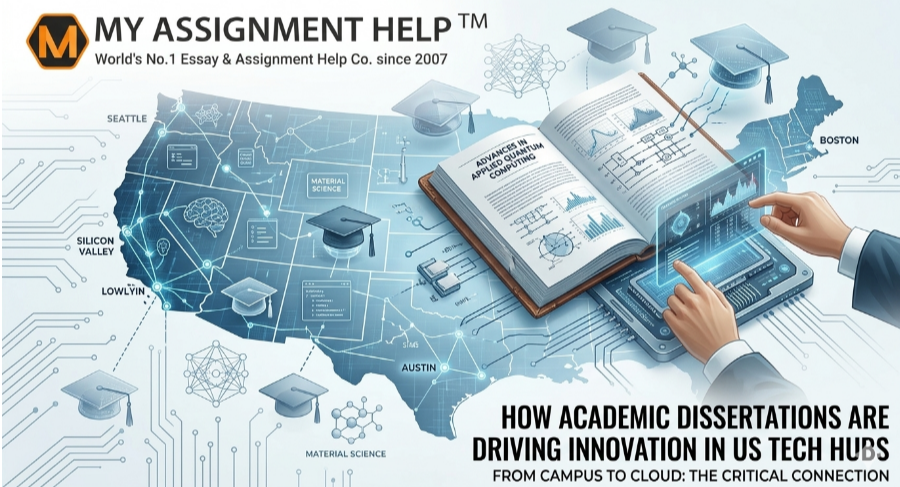
The rapid evolution of the American tech landscape—from the established corridors of Silicon Valley to the burgeoning “Silicon Slopes” of Utah—is often attributed to venture capital and corporate R&D. However, a deeper look reveals that the true bedrock of this innovation is found within the ivory towers of academia. In the United States, the doctoral dissertation is no longer just a final academic hurdle; it is a blueprint for the next generation of disruptive technology.
From the development of early search engine algorithms at Stanford to contemporary breakthroughs in quantum computing at MIT, the rigorous process of deep research continues to fuel the US economy.
The Symbiosis of Academic Rigor and Industrial Application
The relationship between US research universities and tech hubs is symbiotic. Universities provide the high-level theoretical frameworks, while tech hubs offer the infrastructure for commercialization. According to the National Science Foundation (NSF), federal obligations for research and development at universities reached record highs in recent years, emphasizing the government’s trust in academic output.
For many doctoral candidates, the journey involves navigating complex datasets and years of peer-reviewed scrutiny. This path is often daunting, leading many scholars to seek professional mentorship. When the pressure of deadlines and technical requirements peaks, students often turn to myassignmenthelp for structural guidance. Utilizing reliable online dissertation help ensures that the core research remains the priority while the formatting and administrative rigors of the 200-page document are managed by experts. This support system allows researchers to focus on the “innovation” rather than the “red tape,” accelerating the speed at which ideas move from a Google Doc to a startup pitch deck.
Data-Driven Breakthroughs: The Numbers Behind the Innovation
The impact of dissertation-level research on the US economy is quantifiable. A study by the National Bureau of Economic Research (NBER) indicates that “patent-producing” dissertations are significantly more likely to lead to high-growth startups.
| Tech Hub Region | Primary Research Focus | Estimated Economic Impact (Annual) |
| Silicon Valley (CA) | AI, Machine Learning, SaaS | $90B+ |
| Route 128 (MA) | Biotech, Robotics, Quantum | $65B+ |
| Research Triangle (NC) | AgTech, Health Informatics | $40B+ |
| Austin (TX) | Semiconductors, Cybersecurity | $35B+ |
The Role of Niche Research: Marketing and Consumer Data
Innovation isn’t limited to hardware and code. In the digital age, how we sell technology is as important as the technology itself. This is where specialized research, such as a marketing dissertation help from seasoned academics, becomes invaluable. Understanding consumer behavior in the US through the lens of big data and neuromarketing is a frequent subject of doctoral study. These dissertations often become the foundational strategies for major US tech firms looking to break into saturated markets.
Key Takeaways for Doctoral Candidates
- Commercial Potential: Always evaluate if your research has a viable application in the private sector.
- Collaboration is Key: US tech hubs thrive on university partnerships (e.g., Stanford’s Office of Technology Licensing).
- Support Systems: Don’t let the complexity of the writing process stall your innovation. Professional editing and structural support can keep your project on track.
- Data Integrity: In the era of AI, original, high-quality data in your dissertation is your most valuable asset.
Frequently Asked Questions (FAQs)
1. How do US universities help in commercializing dissertation research?
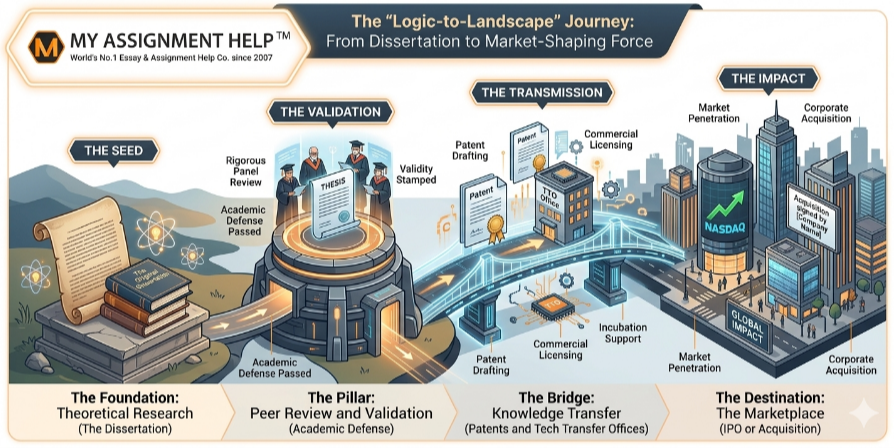
Most major US research universities have Technology Transfer Offices (TTOs). These offices help students patent their findings and connect them with venture capitalists to turn their dissertation into a startup.
2. Is it ethical to use dissertation help services?
Yes, as long as the service is used for guidance, structural assistance, and editing. Professional services provide the scaffolding, while the original research and intellectual contribution remain the work of the student.
3. Which US cities are currently the best for tech-based academic research?
While San Francisco and Boston remain leaders, cities like Seattle, Austin, and Raleigh-Durham are seeing massive growth due to their proximity to top-tier research institutions.
4. Can a marketing dissertation influence tech innovation?
Absolutely. Modern tech innovation relies heavily on user experience (UX) and data-driven market entry strategies, both of which are central themes in advanced marketing research.
Author Bio
Dr. Sarah Mitchell is a Senior Academic Strategist at myassignmenthelp. With over 12 years of experience in higher education across the United States, she specializes in assisting doctoral candidates in bridging the gap between complex research and clear, impactful writing. Dr. Mitchell has published numerous papers on the intersection of educational technology and regional economic growth.
References
- National Science Foundation (NSF). “Higher Education Research and Development Survey.” (2025-2026).
- National Bureau of Economic Research (NBER). “The Impact of Academic Research on Industrial Innovation.”
- U.S. Patent and Trademark Office (USPTO). “Annual Report on University-Led Patenting